


Understanding market trends is essential for investors, traders, and businesses looking to make informed decisions in today’s fast-paced financial world. Market trend analysis is the process of studying price movements, patterns, and market behavior to identify the direction in which a market or asset is moving.
By analyzing trends, investors can spot opportunities, minimize risks, and plan both short-term and long-term strategies. Unlike simply following market news, trend analysis provides insights into why prices are moving and what may happen next, giving you a strategic advantage. In this article, we will explore what market trend analysis is, why it matters, the types of trends, tools and techniques, common mistakes to avoid, and how to use trend analysis effectively to make smarter financial decisions.
What is Market Trend Analysis?
Market trend analysis is the process of studying the movement of prices in a financial market to identify patterns and predict future direction. It helps investors and traders understand whether a market is moving upwards, downwards, or sideways, allowing them to make informed decisions rather than relying on guesswork.
Types of Market Trends
- Uptrend (Bullish Trend): Prices are consistently rising, indicating positive market sentiment and growth opportunities.
Example: A technology stock that steadily rises over several months shows an uptrend, signaling investors it may continue to perform well. - Downtrend (Bearish Trend): Prices are consistently falling, indicating negative sentiment and potential risks.
Example: A company facing declining profits may show a downtrend, warning investors to avoid or sell the stock. - Sideways/Range-Bound Trend: Prices move within a narrow range, showing indecision or consolidation in the market.
Example: A stock fluctuates between $50–$55 for weeks without breaking above or below, indicating a sideways trend.
Short-Term vs Long-Term Trends
- Short-term trends: Last days to weeks; useful for day traders or short-term investors.
- Medium-term trends: Last weeks to months; help swing traders and active investors.
- Long-term trends: Last months to years; critical for long-term investors planning strategic moves.
Why It’s Important
Market trend analysis is not just about knowing what is happening, but understanding why it is happening and predicting potential future movements. By analyzing trends, investors can identify opportunities early, avoid losses, and plan strategies aligned with their financial goals.
Example: If a market trend analysis shows consistent growth in renewable energy stocks due to global climate policies, investors can allocate funds to this sector for potential gains while avoiding declining sectors.
Why Market Trend Analysis Matters
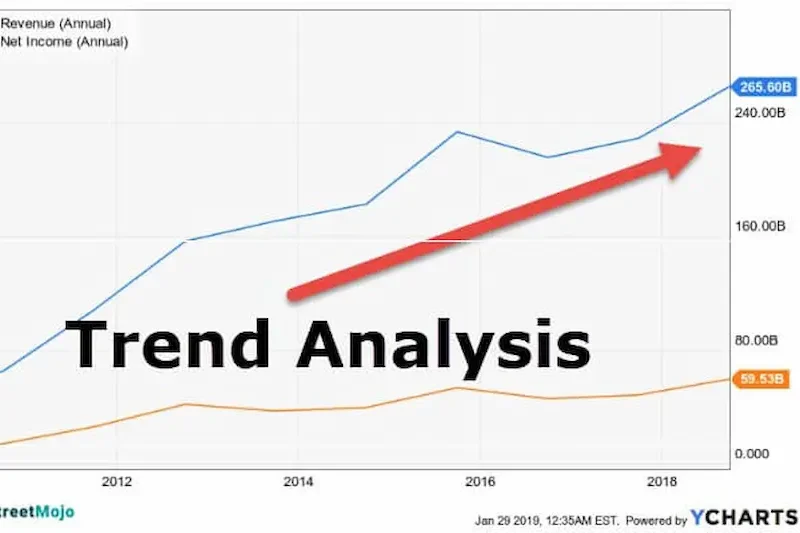
1. Identify Profitable Opportunities
Market trend analysis allows investors and traders to spot trends early, giving them the chance to capitalize on price movements. Recognizing whether a market or asset is trending upwards, downwards, or sideways helps make timely investment decisions.
Example: If trend analysis shows a growing demand for electric vehicles, investors can focus on EV stocks before the market fully recognizes their potential.
2. Reduce Risks and Avoid Losses
By analyzing trends, investors can avoid entering markets at the wrong time. Recognizing a downtrend or market weakness helps prevent losses and protects portfolios.
Example: A stock showing a consistent downward trend due to poor earnings reports signals investors to sell or avoid buying.
3. Support Short-Term and Long-Term Strategies
Trend analysis helps both short-term traders and long-term investors plan their strategies. Short-term trends guide day-to-day trading, while long-term trends inform portfolio planning and strategic investments.
Example: A long-term uptrend in technology stocks can guide investors to hold their positions, while short-term volatility may offer trading opportunities for swing traders.
4. Understand Market Sentiment
Trend analysis reflects the psychology of investors and market participants. Identifying bullish or bearish sentiment helps anticipate market reactions to news or events.
Example: A sideways trend may indicate market indecision, warning investors to wait for a clear breakout before making major moves.
5. Make Data-Driven Decisions
Instead of relying on speculation, market trend analysis provides objective, evidence-based insights. This improves confidence and reduces emotional decision-making.
Example: Using moving averages or trend lines, an investor can confirm the direction of a stock before investing, minimizing impulsive choices.
6. Gain a Competitive Advantage
Investors who understand trends can act before the majority, gaining an advantage over others who react later.
Example: Early recognition of a growing renewable energy trend allows investors to enter the market at favorable prices before mainstream interest drives prices higher.
Summary:
Market trend analysis matters because it transforms complex market data into actionable knowledge. It helps investors identify opportunities, reduce risks, plan strategies, understand sentiment, make informed decisions, and gain a competitive edge in both short-term and long-term investing.
you may also like to read these posts;
Business Finance Updates: Latest Trends Every Company Must Know
Personal Finance News: Smart Money Updates You Need
Top Latest Finance Updates to Boost Your Financial Knowledge
Finance News Updates: Stay Ahead in Markets & Investments
Money Market Updates: What’s Happening and Why It Matters
Tools and Techniques for Market Trend Analysis
1. Technical Analysis
Technical analysis studies historical price movements and trading volumes to predict future market trends. Traders use charts, patterns, and technical indicators to understand the market direction.
Common Tools and Indicators:
- Moving Averages (MA): Helps identify the overall trend by smoothing out price fluctuations.
- Relative Strength Index (RSI): Measures momentum to detect overbought or oversold conditions.
- MACD (Moving Average Convergence Divergence): Indicates trend changes and momentum.
Example: If a stock’s price crosses above its 50-day moving average, it may indicate the start of an uptrend.
2. Fundamental Analysis
Fundamental analysis examines economic data, company performance, and industry trends to assess the value of an asset. While technical analysis focuses on price action, fundamental analysis focuses on why prices might change.
Example: A strong earnings report and increasing revenue for a tech company can support a bullish trend in its stock.
3. Sentiment Analysis
Sentiment analysis tracks investor behavior, news, and social media trends to gauge market psychology. Understanding sentiment helps predict potential market reactions.
Example: Positive news about a government stimulus package may create bullish sentiment, pushing stock prices higher.
4. Software and Apps
Several platforms provide tools for trend analysis, charting, and data visualization:
- TradingView: Advanced charting tools and real-time data
- MetaTrader: Popular for forex and commodities trend analysis
- Yahoo Finance / Investing.com: Easy access to price data, charts, and indicators
5. Trend Lines and Patterns
Drawing trend lines on price charts helps visualize support and resistance levels. Recognizing patterns like head and shoulders, triangles, or double tops/bottoms can signal potential reversals or trend continuation.
Example: A stock forming a triangle pattern may break upward, signaling a continuation of the uptrend.
6. Combining Techniques
For better accuracy, most investors combine multiple methods: technical indicators, fundamental data, and market sentiment. Using more than one approach reduces risk and improves the reliability of predictions.
Example: A stock showing an uptrend on moving averages, backed by strong earnings (fundamental), and positive investor sentiment is more likely to continue rising.
How to Conduct Market Trend Analysis

Step 1: Identify the Asset or Market
Start by choosing the asset, stock, index, or market you want to analyze. Focus on a specific area to make your trend analysis more accurate.
Example: You may choose to analyze Apple Inc. stock, the S&P 500 index, or crude oil prices.
Step 2: Observe Historical Price Patterns
Examine the asset’s price history over different time frames—daily, weekly, or monthly. Look for trends, highs and lows, and repeated patterns that indicate market behavior.
Example: If a stock consistently rises over the past 6 months, it may indicate a long-term uptrend.
Step 3: Use Technical Indicators
Apply technical analysis tools like moving averages, RSI, MACD, and trend lines to confirm the direction of the trend and identify potential reversals or breakout points.
Example: A stock crossing above its 50-day moving average may signal the start of a bullish trend.
Step 4: Check Fundamental Factors
Review company earnings, revenue, industry performance, and economic indicators. Fundamental analysis ensures the trend has a solid basis and isn’t just a short-term fluctuation.
Example: Strong quarterly earnings can support a rising trend in a company’s stock price.
Step 5: Consider Market Sentiment
Analyze investor sentiment, news, and social media trends to gauge how market participants feel about the asset. Positive or negative sentiment can accelerate trends.
Example: Bullish news about a government stimulus can push the stock market upward even if technical indicators show consolidation.
Step 6: Make Informed Decisions
Combine your findings from technical indicators, fundamentals, and sentiment analysis to decide whether to buy, sell, or hold the asset. Always consider your risk tolerance and investment goals.
Example: If trend analysis shows a strong uptrend supported by good earnings and positive sentiment, you may choose to buy or hold. If the trend is down, consider selling or avoiding the asset.
Step 7: Monitor Regularly
Market trends can change quickly. Regular monitoring helps you adapt to new patterns, news, or market events, ensuring your decisions remain timely and effective.
Example: Reviewing weekly charts and news updates keeps you aware of changes in a stock’s trend or sector performance.
Summary:
Conducting market trend analysis is a systematic process that combines technical indicators, fundamental research, and market sentiment. Following these steps helps investors make smarter, data-driven decisions, reduce risk, and identify profitable opportunities.
What is market trend analysis?
Market trend analysis is the process of studying price movements, patterns, and market behavior to determine the direction of an asset or market. It helps investors and traders make informed decisions rather than relying on guesswork.
Why is market trend analysis important?
It helps identify profitable opportunities, reduce risks, understand market sentiment, and plan short-term and long-term strategies for investing or trading.
Who can use market trend analysis?
Investors, traders, businesses, and financial analysts can all benefit. Beginners can start with basic techniques, while experienced professionals use advanced tools for detailed analysis.
Conclusion
Market trend analysis is an essential tool for investors, traders, and businesses seeking to make informed financial decisions. By studying price movements, identifying patterns, and analyzing market sentiment, you can understand whether an asset or market is trending upwards, downwards, or sideways. Conducting trend analysis helps spot profitable opportunities early, reduce risks, plan both short-term and long-term strategies, and make confident, data-driven decisions. Using a combination of technical indicators, fundamental research, and sentiment analysis ensures a well-rounded approach to understanding the market. Whether you are a beginner or an experienced investor, mastering market trend analysis gives you a competitive edge and helps you navigate today’s dynamic financial markets with clarity and confidence.


